
Yume Comic
Yume Comic is an AI tool that transforms your text prompts into consistent, full manga or webtoon pages in minutes with no drawing skills needed.
Visit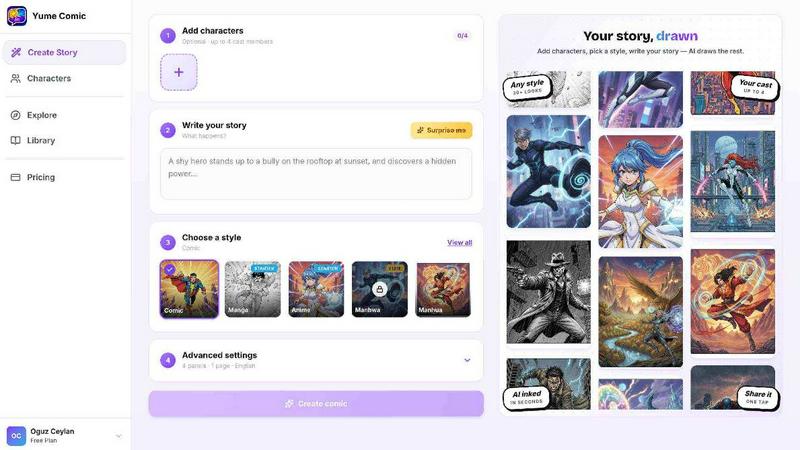
About Yume Comic
Yume Comic is an advanced AI-powered comic creation tool designed to democratize visual storytelling. It enables anyone, regardless of artistic skill or drawing ability, to transform written ideas, character concepts, and story narratives into fully realized comic-style images, scenes, and multi-panel pages. The platform serves a broad audience including storytellers, content creators, social media managers, manga and anime enthusiasts, and anyone exploring the intersection of creativity and artificial intelligence. At its core, Yume Comic eliminates the traditional barriers to entry in comic creation, such as the need for years of drawing practice, expensive software, or specialized hardware. Users simply provide a text prompt describing their desired scene, character, or plot point, and the AI interprets this input to generate coherent, visually appealing comic panels. The tool supports multiple popular visual styles including classic manga, manhwa, webtoon, and traditional comic strips, allowing creators to match their project's aesthetic requirements. A standout value proposition is character consistency: once a protagonist is defined, Yume Comic ensures that character's appearance, including hair, clothing, and facial features, remains uniform across all panels within a story. This feature is critical for serialized content and professional-looking results. The platform operates entirely within a web browser, requiring no downloads or installations, making it accessible on both desktop and mobile devices. By combining natural language processing with generative AI, Yume Comic empowers users to act as both director and writer, focusing on plot development and dialogue while the AI handles the visual execution. The result is a streamlined workflow that can produce a complete manga page or webtoon episode in minutes, transforming fleeting ideas into tangible, shareable visual narratives.
Features of Yume Comic
Prompt to Page Generation
This core feature allows users to convert a simple one-line story idea or detailed scene description into a fully laid out multi-panel comic page in seconds. The AI analyzes the text input to determine panel composition, character placement, dialogue bubble positioning, and cinematic camera angles. It handles complex narrative elements like action sequences, emotional expressions, and environmental details, effectively translating written prose into visual storytelling. This eliminates the need for manual layout planning, sketching, or perspective drawing, making the creation process as simple as typing a sentence.
Consistent Character Preservation
A major technical challenge in sequential art is maintaining character visual consistency across different panels and scenes. Yume Comic solves this with a dedicated character definition system. Once a user describes their protagonist, including details like hairstyle, clothing, facial structure, and distinctive traits, the AI locks these attributes into memory. Every subsequent generation for that story automatically references this character profile, ensuring the hero looks identical from the first panel to the last. This feature is essential for creating professional, coherent narratives without manual re-drawing or editing.
Multi-Style Versatility
The platform offers a diverse library of visual styles that users can switch between with a single click. Options include classic black-and-white shonen manga, moody and atmospheric manhwa, vibrant vertical-scroll webtoons, and traditional comic strip formats. Each style comes with pre-configured rendering parameters that affect line weight, shading techniques, color palettes, panel borders, and text formatting. This allows creators to experiment with different aesthetics for the same story, helping them find the perfect visual identity for their project without needing to learn multiple art techniques or software.
Browser-Based Accessibility
Yume Comic operates entirely within a standard web browser, removing the need for powerful local hardware, expensive graphics tablets, or complex software installations. Users can access the tool from any device with an internet connection, including laptops, tablets, and smartphones. This low barrier to entry means creators can start making comics immediately, whether they are at home, in a coffee shop, or on a commute. The interface is designed for intuitive use, with clear prompts and visual feedback, making it accessible to complete beginners while still offering enough depth for experienced storytellers.
Use Cases of Yume Comic
Rapid Prototyping for Story Ideas
Writers and narrative designers can use Yume Comic to quickly visualize scenes from their developing stories. Instead of describing a dramatic rainy standoff or a cozy cafe meeting in abstract text, they can generate actual comic panels to see how the scene flows visually. This rapid prototyping helps identify pacing issues, dialogue placement problems, or character interaction dynamics early in the creative process. It allows authors to iterate on their story structure by generating multiple versions of the same scene with different angles, expressions, or panel layouts, ultimately strengthening the narrative before committing to a final draft.
Social Media Content Creation
Social media managers and content creators can leverage Yume Comic to produce engaging, shareable visual stories for platforms like Instagram, Twitter, and TikTok. Short comic strips or single-panel gags can be generated quickly to illustrate brand messages, explain concepts, or entertain followers. The multi-style feature allows content to be tailored to different audience preferences, such as using a webtoon style for younger demographics or a classic comic strip look for nostalgic content. This approach diversifies content formats beyond standard photos and videos, increasing audience engagement and shareability.
Educational and Instructional Materials
Educators and trainers can use Yume Comic to create illustrated guides, step-by-step instructions, or narrative-based learning materials. Complex processes or historical events can be broken down into sequential comic panels that are easier to understand and remember than blocks of text. The character consistency feature is particularly useful for creating recurring educational characters that guide learners through a curriculum. This application is valuable for online courses, training manuals, and children's educational content, where visual storytelling enhances comprehension and retention.
Personal Manga and Webtoon Projects
Aspiring manga artists and webtoon creators can use Yume Comic to produce complete episodes or chapters of their original stories without needing years of drawing practice. They can focus on writing compelling dialogue, developing plot twists, and building character arcs while the AI handles the visual execution. The tool supports serialized storytelling by maintaining character and style consistency across multiple episodes. This enables creators to build a portfolio, share their work on webtoon platforms, or even publish professional-looking comics that compete with traditionally drawn works.
Frequently Asked Questions
Do I need any drawing skills to use Yume Comic?
No, Yume Comic is specifically designed for users without any drawing skills. The entire creation process is driven by text prompts and style selections. You simply describe your idea, character, or scene in natural language, and the AI generates the corresponding comic panels. There is no need for sketching, inking, coloring, or any traditional art techniques. The platform handles all visual aspects, from perspective and anatomy to shading and panel layout.
How does Yume Comic ensure my character looks the same across panels?
Yume Comic uses a character definition system that stores a detailed profile of your protagonist. When you first describe your character, including their appearance, clothing, and distinguishing features, the AI creates a persistent reference model. For every subsequent panel generation within that story, the system automatically applies this model to maintain visual consistency. This means your hero's hair, face, outfit, and proportions will remain identical from the first panel to the last, eliminating one of the most difficult aspects of manual comic creation.
What styles can I create with Yume Comic?
The platform offers a wide range of popular comic and manga styles. You can choose from classic black-and-white shonen manga, which features high-contrast linework and dynamic action poses; moody and detailed manhwa, known for its vertical scroll format and realistic shading; vibrant, colorful webtoon styles optimized for mobile reading; and traditional Western comic strip aesthetics. You can switch between these styles at any time with a single click, allowing you to experiment with different looks for the same story.
Is Yume Comic free to use and how do I access it?
Yume Comic is a free tool that operates directly in your web browser. There is no software to download or install. You can access it on any device with an internet connection, including desktop computers, laptops, tablets, and smartphones. To get started, simply visit the Yume Comic website, sign up for an account, and begin creating. The free access allows you to generate comic pages, explore different styles, and test the platform's capabilities without any upfront cost.
Similar to Yume Comic

Discover 50,000+ ready-to-use AI prompts for text, image, and video generation. Save time and create better results with AI.

Create AI videos, images, avatars, and audio in one creative workspace.

Create polished AI images and videos from prompts or references for social posts, ads, flyers, album covers, and campaigns.

AI YouTube thumbnail maker that helps creators generate high-click thumbnails faster.

One-click UGC videos, product photo sets, and reusable AI workflows

Square Face Generator is a free browser-based tool for creating cute square avatar icons by mixing parts and colors, with no login or account.

QUVIAI empowers users to create stunning visuals, videos, and music from simple inputs, revolutionizing architectural design and creative projects.