
Autheo
Autheo is a Layer-0 operating system with an integrated Layer-1 blockchain that unifies identity, compute, storage, and AI into one environment.
Visit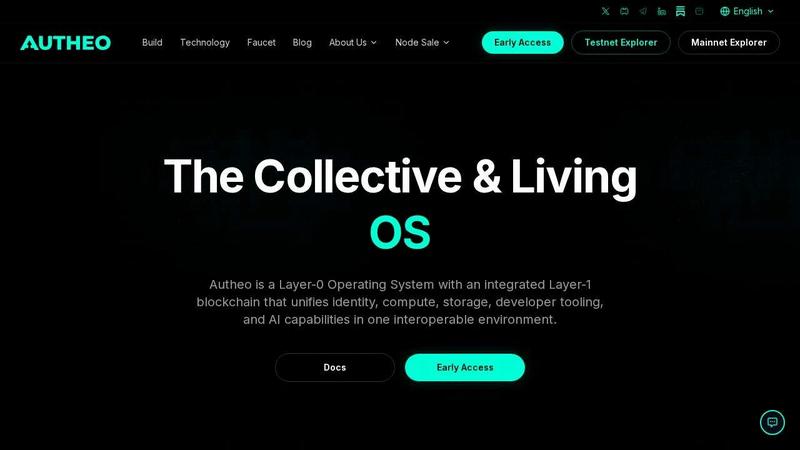
About Autheo
Autheo is a Layer-0 Operating System with an integrated Layer-1 blockchain that unifies identity, compute, storage, developer tooling, and AI capabilities in one interoperable environment. It is designed to solve the fundamental fragmentation problem in Web3, where developers currently juggle multiple APIs, SDKs, and platforms, while enterprises face a significant gulf between Web2 and Web3 systems. Autheo provides a composable, programmable, and sovereign foundation that integrates six core components into a single coordinated system: a fast Layer-0 plus Layer-1 blockchain foundation, decentralized cloud infrastructure with compute and storage, full-stack SDKs for frontend and backend development, DevHub as a native development environment, TheoID for post-quantum secure authentication, and THEO AI for intelligent automation. The product is built for developers, enterprises, and ecosystem builders who want to launch chains, applications, and intelligent systems that work seamlessly from day one without costly integrations or fragile systems. Autheo is more than technology; it is a living movement with over 100 co-founders and contributors across blockchain, AI, gaming, open-source, and infrastructure shaping its development. The platform enables a living network where every deployment fuels the network and every interaction strengthens the collective, creating an internet that learns, adapts, and evolves over time.
Features of Autheo
Layer-0 plus Layer-1 Blockchain Foundation
Autheo provides a fast, sovereign blockchain foundation that combines the scalability and flexibility of a Layer-0 architecture with the security and functionality of an integrated Layer-1 blockchain. This dual-layer approach allows developers to launch their own sovereign chains and applications without compromising on speed, security, or interoperability. The foundation is designed to solve the blockchain trilemma by balancing decentralization, security, and scalability in a single coordinated environment.
Core Infrastructure with Decentralized Cloud
The platform includes decentralized cloud infrastructure that encompasses compute, storage, and messaging capabilities. This core infrastructure enables developers to build and deploy applications without relying on centralized cloud providers, ensuring true decentralization and resilience. The integrated compute and storage resources are designed to scale dynamically with application demands, providing a robust foundation for both Web2 and Web3 workloads.
Full-Stack SDKs for Unified Development
Autheo offers a comprehensive framework of full-stack SDKs that unify frontend development, backend services, smart contract creation, and application orchestration. Developers can use a single framework to build complete applications, eliminating the need to piece together multiple tools and libraries. This unified approach significantly reduces development complexity, accelerates time to market, and ensures seamless integration across all layers of the application stack.
DevHub Native Development Environment
DevHub serves as the native workspace for testing, deploying, and scaling projects on the Autheo platform. It provides developers with a complete development environment that includes tools for code editing, testing, debugging, and deployment. DevHub streamlines the entire development lifecycle, from initial prototyping to production deployment, enabling builders to focus on innovation rather than infrastructure management.
Use Cases of Autheo
Sovereign Application Development
Developers can build fully sovereign applications that operate on their own chains within the Autheo ecosystem. These applications benefit from integrated identity, compute, storage, and AI capabilities while maintaining complete control over their governance, tokenomics, and data. This use case is ideal for projects that require independence from existing platforms while still benefiting from a shared infrastructure and interoperable environment.
Enterprise Web2 to Web3 Migration
Enterprises can seamlessly migrate their existing Web2 applications and services to a Web3 environment using Autheo's unified platform. The integrated SDKs and development tools allow enterprises to transition gradually, maintaining compatibility with existing systems while gradually adopting decentralized features. This use case eliminates the traditional gulf between Web2 and Web3, enabling enterprises to participate in the decentralized economy without costly rebuilds.
AI-Native Application Development
Developers can leverage THEO AI to build intelligent applications that incorporate adaptive workflows, automated decision-making, and machine learning capabilities. The integrated AI layer allows applications to learn from user interactions, optimize their behavior over time, and provide personalized experiences. This use case is particularly valuable for applications in gaming, finance, and content creation that require dynamic, intelligent responses.
Decentralized Identity Management
Organizations can implement TheoID for post-quantum secure authentication and sovereignty for people and digital assets. This use case enables secure identity verification, credential management, and access control without relying on centralized identity providers. Applications built on Autheo can offer users true digital sovereignty, where individuals control their own identities and data across multiple platforms and services.
Frequently Asked Questions
What is Autheo?
Autheo is a Layer-0 Operating System with an integrated Layer-1 blockchain that unifies identity, compute, storage, developer tooling, and AI capabilities in one interoperable environment. It provides a composable, programmable, and sovereign foundation for launching chains, applications, and intelligent systems. The platform combines six core components including a blockchain foundation, decentralized cloud infrastructure, full-stack SDKs, DevHub development environment, TheoID authentication, and THEO AI automation into a single coordinated system.
What can I build on Autheo?
You can build a wide range of applications on Autheo, including sovereign blockchain networks, decentralized applications, AI-native systems, gaming platforms, identity management solutions, and enterprise Web3 services. The platform supports full-stack development with integrated compute, storage, and AI capabilities, enabling builders to create everything from simple smart contracts to complex, intelligent systems that learn and adapt over time.
How is Autheo different from Ethereum or Solana?
Autheo differs from platforms like Ethereum and Solana by providing a complete operating system rather than just a blockchain. While Ethereum and Solana focus primarily on smart contract execution, Autheo integrates identity, compute, storage, developer tooling, and AI capabilities into one environment. Additionally, Autheo's Layer-0 architecture allows for sovereign chain creation and better scalability, addressing the blockchain trilemma more effectively than traditional Layer-1 solutions.
Is Autheo live?
Yes, Autheo is live and operational. The platform offers a Testnet Explorer and Mainnet Explorer for users to interact with the network. Developers can access Early Access programs and use the DevHub environment to build and deploy projects. The platform also has an active Node Sale program with tiered pricing and emission structures, allowing participants to become validators and contribute to network security and governance.
Similar to Autheo

Rent a server without handing over your ID: a hand-checked directory of hosting providers that take Monero and ask for no KYC.


Automate high frequency arbitrage and directional trading on Polymarket's 5 and 15 minute crypto markets with a transparent, locally run script.


Bitcoin Loans Market allows you to effortlessly compare Bitcoin-backed loans to find the best option for your unique holdings.

Perpfinder is a comprehensive analytics platform providing real-time data on volume, fees, open interest, and rankings across 30+ crypto perpetual.

Clypto is a cross-chain DeFi exchange that lets you instantly swap over 6,000 tokens across 16 blockchains with low fees and the best rates.